Pet health
Panting, bad breath, head shaking: when a normal habit stops being normal
Six everyday behaviors, sorted into what is expected and what is worth a closer look, using the detail that decides.
Expected
- After exercise or play
- In warm weather
- When they are excited
Worth a closer look
- It started suddenly
- It happens at rest
- It carries on through the night
Call now
- Heavy panting with weakness or drooling
- Gums or tongue have changed color
- Neck stretched out to breathe
Criteria as published by Petcube on petcube.com
Every list of pet symptoms has the same flaw. It tells you what to look for, then leaves you alone with the hard part, which is deciding whether what you are looking at is a problem at all.
A dog pants. A dog's breath smells. A cat vanishes under the bed for an afternoon. All three are ordinary. All three are also, sometimes, the first thing an owner noticed. What separates the two cases is rarely the behavior itself. It is the context: when it started, whether it happens at rest, whether it is getting worse, and whether it is normal for that animal in particular.
So this page does the sorting rather than the listing. Six signals, each split into three columns: expected, worth a closer look, and call now. Every criterion comes from guidance Petcube publishes on its own site, and each section says where.
How to read the three columns
- Expected
- There is an ordinary explanation sitting right in front of you, and the behavior stops when the explanation does.
- Worth a closer look
- No ordinary explanation, or it started suddenly, or it happens at rest, or it is slowly getting worse. This is not an emergency. It is a conversation.
- Call now
- Do not finish reading. The full list of these is near the end of this page.
Petcube's own guide to panting compresses the whole method into one sentence, and it works for every signal below:
When your dog pants abnormally fast or hard but isn't excited, hasn't exercised, and the temperature isn't hot, there is likely a medical cause. Petcube, When is Dog Panting Abnormal?
Three tests hide inside that sentence. Is there an explanation in the room? Is this new? Is the animal at rest? Hold on to them. They are the only tools this page uses.
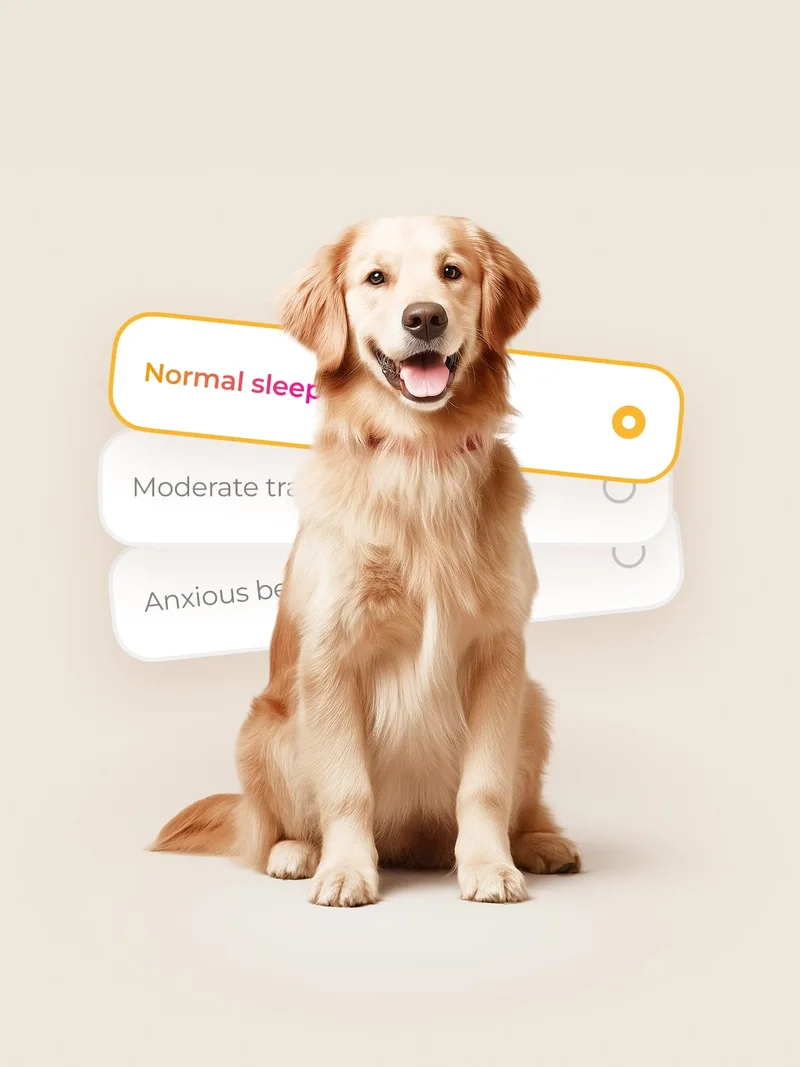
Signal onePanting and fast breathing
Is your dog's panting normal, or is it telling you something?
Dogs do not sweat the way we do. Panting is the cooling system, which is why panting after a walk, on a hot afternoon, or in the thirty seconds after you come through the door is the system working exactly as designed.
Some dogs also run loud by construction. Petcube's guide lists pugs, shih tzus, bulldogs, French bulldogs, affenpinschers, Boston terriers, chow chows, boxers and Cavalier King Charles spaniels among the breeds known for loud, snuffling or fast breathing. For those dogs, noisy breathing is a baseline, not a change. The whole exercise is about detecting change.
15 to 40 /min
Average puppy respiratory rate, which varies with breed, activity and age
30 /min
Roughly what a high energy adult breed can run at
10 /min
As few as this in a low energy breed, which is why the average is close to useless on its own
Figures published by Petcube in its panting guide. The number that matters is not the average, it is your own animal's, measured twice.
A few details are worth writing down when you count. Petcube's guide flags a dog stretching its neck out to breathe, an upward curling tongue, a change in gum or tongue color, and fatigue as the things to note alongside the panting itself. And it links constant panting at night to conditions including Cushing's disease, arthritis and hypothyroidism, which is a fair summary of why night panting deserves more attention than daytime panting.
Fast breathing during sleep can simply be REM. Dogs dream, and dreaming dogs breathe irregularly. Long stretches of it, night after night, are a different thing.
Expected
- After exercise, in the heat, when excited
- A brachycephalic breed that has always breathed loudly
- Short bursts during sleep
Worth a closer look
- Fast or hard breathing with no exercise, no excitement, no heat
- Panting that only shows up at night
- Long stretches of disrupted breathing while asleep
Call now
- Neck stretched out, tongue curling upward
- Gum or tongue color has changed
- Panting with weakness or collapse
Source: petcube.com, When is Dog Panting Abnormal?
Signal twoBreath, gums and a change in chewing
Bad breath, a different way of chewing, or irritated gums are easy to overlook.
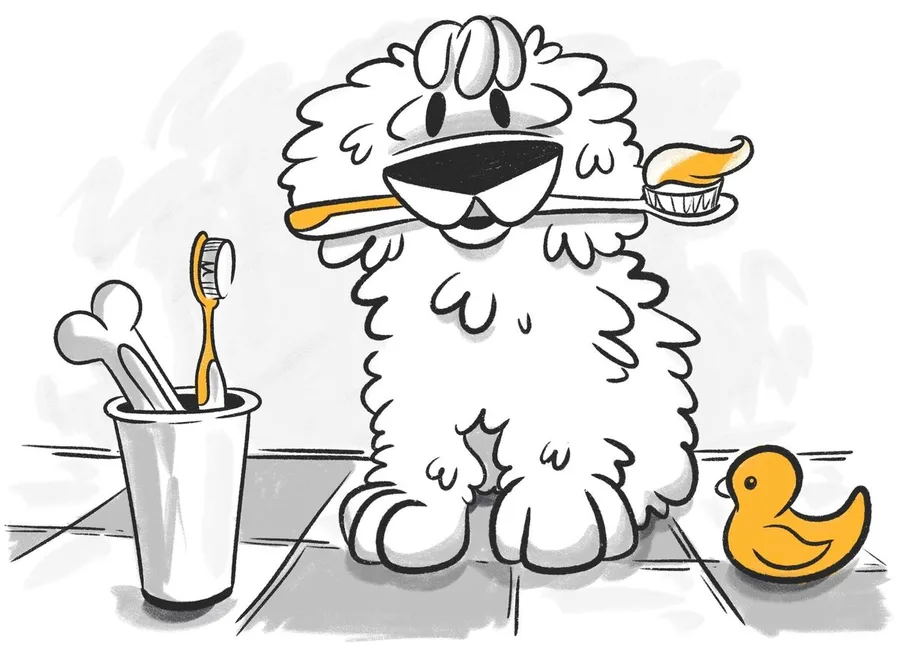
Dog breath is a joke until it is a symptom. Petcube's guide is blunt about the base rate: most cases of bad breath come down to poor oral hygiene or periodontal disease. Plaque and tartar build up, bacteria follow, and over time that can turn into gum disease, cavities, infections and abscesses. None of that announces itself. It just smells.
What makes this signal unusually readable is that the smell itself carries information. Petcube's guide sorts it:
| What it smells like | What their guide associates with it |
|---|---|
| The usual bad breath | Most often poor oral hygiene or periodontal disease |
| Like urine | A good indication to have the kidneys checked |
| Bad breath plus vomiting, appetite loss, yellowish gums | Possibly a liver problem, and treated as urgent |
| Fishy, with no fish involved | Most likely an abscess, a cavity, or a foreign body lodged in the mouth |
| Persistent, in an older animal | Oral tumors become more common with age |
Source: petcube.com, Does Your Dog's Breath Stink?
One practical warning from the same guide, because it gets people every year: human toothpaste can contain xylitol, which is toxic to dogs. Brushing is right. Brushing with your own tube is not.
Expected
- A smell that follows something they ate and then fades
- Mild dog breath in an animal whose teeth get brushed
Worth a closer look
- Breath that has changed and stayed changed
- Chewing on one side, or dropping food
- Gums that look red or irritated
Call now
- Bad breath with vomiting, appetite loss and yellowish gums
- A smell like urine on the breath
- Visible mass or bleeding in the mouth
Source: petcube.com, Does Your Dog's Breath Stink?
Signal threeHead shaking and one ear being scratched
Frequent shaking, scratching one ear, or a slight head tilt.
Occasional head shaking is so normal that most owners never register it. Petcube's guide draws the line at frequency and suddenness: a dog that starts shaking its head a lot, all of a sudden, is a dog with something in or on its ear. The list of causes is short and mostly treatable. Ear infection, an allergy, ear mites, water trapped after a swim or a bath, a foreign object, an aural hematoma, or a growth.

There is a home check, and it takes four seconds. Lift the ear flap. Redness, swelling or discharge points to an infection. The guide is careful to add that an infection can sit deep in the canal with nothing visible from outside, so a clean looking ear does not close the question. Dogs also have longer ear canals than we do, which is why water gets in easily and comes out badly.
The distinction worth remembering is between a shake and a tremor. A head shake is something the dog chooses to do. A head tremor, as their guide puts it, is something the dog cannot control. Tremors that appear suddenly go straight to the third column.
One more reason not to wait it out: shaking hard enough, long enough, can burst a blood vessel in the ear flap. The flap then swells, feels hot and droops, which is the aural hematoma their guide describes, and it is a second problem caused by the first.
Expected
- The occasional shake, the way dogs have always shaken
- A shake or two after a bath or a swim
Worth a closer look
- Frequent shaking that started recently
- Scratching or pawing at one ear in particular
- A slight, persistent head tilt
- Redness, swelling or discharge under the flap
Call now
- Head tremors the dog cannot control
- An ear flap that has swollen up hot and droopy
- Blood coming from the ear
Source: petcube.com, Dog Shaking Head: Everything You Need to Know
Signal fourSkin, scratching and paw licking
Red spots, bumps, repeated scratching, paw licking.
Itching is not a malfunction. Petcube's guide, medically reviewed by Ivana Crnec, DVM, describes it, quoting a 2023 study on itchiness in dogs, as a reflex mechanism that can be considered a first line of defense. The problem is not that a dog scratches. The problem is excess, and the guide is specific about why excess matters: it causes self-inflicted injuries, it raises the risk of secondary skin infections, and it damages hair follicles, which is where the bald patches come from.
Sequence matters here more than anywhere else on this page. After a flea treatment, a few days of continued itching is expected, because flea allergy dermatitis is a reaction to flea saliva rather than to the fleas still being there. If it has not settled after that, the same guide lists what a vet then works through: bacterial and fungal skin infections, environmental, contact or food allergy, atopic dermatitis, hormonal imbalances, and stress.
Grooming has its own window. Irritation from hot or dull clipper blades shows up on the face, groin and genitals, and post-grooming furunculosis, as the guide quotes Julie Buzby, DVM, usually appears in the first 24 to 48 hours after a groom. If the itch started the day after the groomer, that is not a coincidence, and it is also not something to sit on for a week.
Keep daily logs of the dog's itch level. Use the Petcube Pet Camera to monitor scratching and itching habits while not at home. Petcube, Natural and Vet-Approved Treatments for Dog Itching, medically reviewed by Ivana Crnec, DVM
That instruction is the honest one, and it is the reason the second half of this page exists. Nobody can log an itch level they never saw.

Expected
- A normal amount of scratching for that dog
- A few days of itch straight after a flea treatment
Worth a closer look
- Scratching that has not settled days after treatment
- Red spots, bumps, or one paw being licked raw
- Hair thinning where the scratching happens
- Irritation that appeared 24 to 48 hours after a groom
Call now
- Open, weeping or spreading sores
- Skin damage the dog is actively making worse
Source: petcube.com, Natural and Vet-Approved Treatments for Dog Itching
Signal fiveA cat that hides, drinks more, eats less
Hiding more often. Picky eating. Excessive thirst.
Cats are the hardest animals on this list to read, and Petcube's guide starts by defusing the obvious mistake: hiding is not a symptom. It is essential cat behavior. Every cat should have a spot, and a cat that uses it is a cat doing its job.
The signal is the change. A cat that has always been social and suddenly will not come out is telling you something, and their guide sorts the causes into illness or pain, stress, and pregnancy. The stress list is more mundane than people expect: a move, a new pet, a new baby, thunder, a lawnmower, or nothing more dramatic than you starting work an hour earlier.
Illness rarely travels alone. Their guide points out that hiding driven by illness usually arrives with company, most often loss of appetite or diarrhea, which is exactly why those three signs belong together rather than apart. One of them is a shrug. Two of them at once is a pattern.
Cats don't show their feelings well, so a cat in pain won't look any different than normal, but their behavior and body language can provide clues. Petcube, Crouching Tiger, Hidden Kitty
And the instruction almost everybody gets wrong: do not drag the cat out. Their guide is direct about it. Forcing a frightened or unwell cat out of its safe place makes the fear worse and damages the trust you will need in an hour, when you actually do have to put it in a carrier.
Expected
- A cat that has always liked its hiding spot
- A few hours away after visitors, thunder or a new arrival
- A new cat still settling in
Worth a closer look
- A social cat that suddenly hides
- Hiding for long stretches, rarely coming out
- Hiding together with picky eating, more thirst, or diarrhea
Call now
- Refusing both food and water while weak and dull
- Straining in the litter box with nothing coming out
Sources: petcube.com, Crouching Tiger, Hidden Kitty, and 7 Critical Signs Your Pet Needs Immediate Veterinary Attention
Signal sixHeat, and the one signal with no middle column
One minute your dog is enjoying the summer. The next, something feels wrong.
Heavy panting, weakness, drooling or unusual behavior on a hot day is the one item on this page that does not get a wait and see column. Petcube's guide states it plainly: heatstroke in dogs is a medical emergency that requires urgent treatment, and it can be fatal.
What to do while you are calling, as their guide reports the American Veterinary Medical Association's recommendation: move the dog to a cooler, shaded area and cover them with towels that have been soaked in cold water and then wrung out. Showering with cool water works too. The point is to start cooling before you arrive, not after.
Expected
- Panting on a warm day that settles once they are in the shade with water
Worth a closer look
- A dog that stays hot and heavy after cooling down
- A flat faced breed struggling on days it used to handle
Call now
- Heavy panting with weakness or drooling
- Disorientation or unusual behavior in the heat
- Collapse
Source: petcube.com, When is Dog Panting Abnormal?
Skip the triage
Seven signs Petcube lists as immediate
- Weakness or trouble moving. Limping, or refusing to move at all for several hours.
- Straining to urinate. Their guide gives the normal range as three to five times a day for dogs and two to four for cats. A pet that positions itself and produces nothing goes now.
- Heavy breathing or coughing that has run for a few days with no relief.
- Any seizure. Pacing, panting and trembling can precede one. Go on the first sign.
- Three or more episodes of vomiting in one day, or anything with blood or foreign material in it.
- Serious trauma or severe pain. Compensatory postures, refusal to move, whimpering, even with nothing visible on the surface.
- Refusing food and water while looking weak, dull and unwell.
Source: petcube.com, 7 Critical Signs Your Pet Needs Immediate Veterinary Attention. This page is not veterinary advice.
The part nobody writes down: you were not in the room
Look back at what every middle column asked for. When did it start. Does it happen at rest. Is it getting worse. Is it new for this animal. Not one of those questions can be answered from the ten minutes you spent looking at your dog after work. They all require having watched while nothing was happening, which is precisely the time nobody is watching.
This is the gap Petcube's hardware exists to close, and it is worth being concrete about what it actually does. The Petcube Cam records at 1080p through a 110 degree lens with 8x digital zoom, and switches itself to night vision in low light, with visibility up to 30 feet in the dark. Two way audio runs full duplex, so you can hear the room and speak into it.
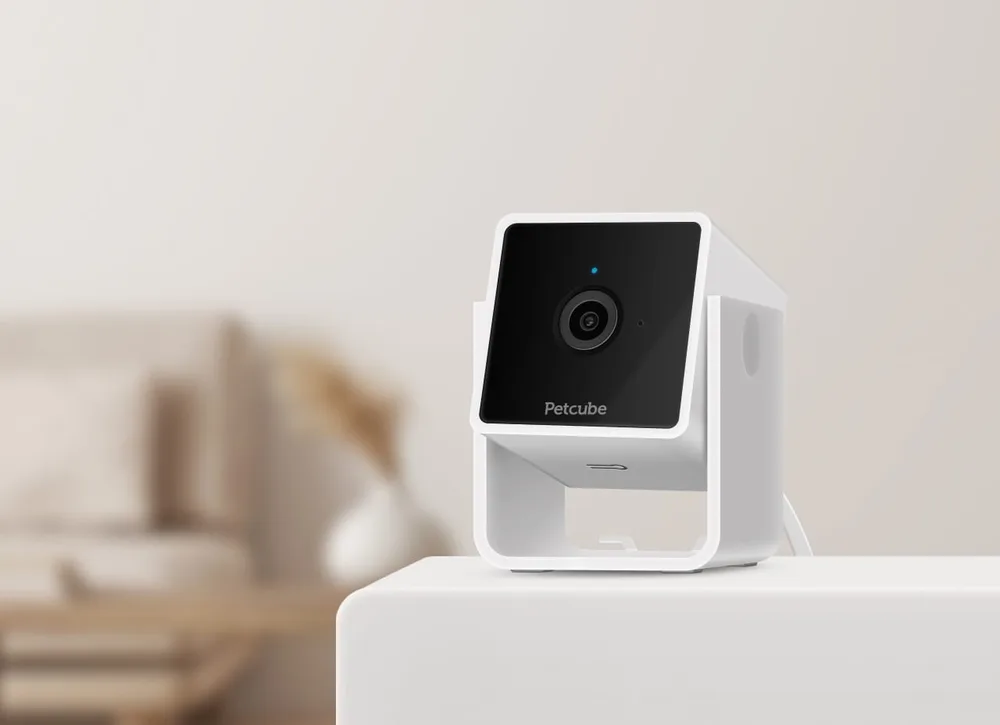
The alerting is the part that turns footage into a diary. Petcube's own description: audio recognition that knows barking from meowing, detection that tells a pet from a person, motion zones you draw yourself so a restricted corner of the room raises a flag, and emergency alerts if glass breaks or a fire is detected. Their Cam page also offers something closer to this article's purpose: choose from fifteen behaviors you are concerned about, and get told when they happen.

It knows what it is looking at
Barking from meowing, a pet from a person, a chosen behavior from background movement.

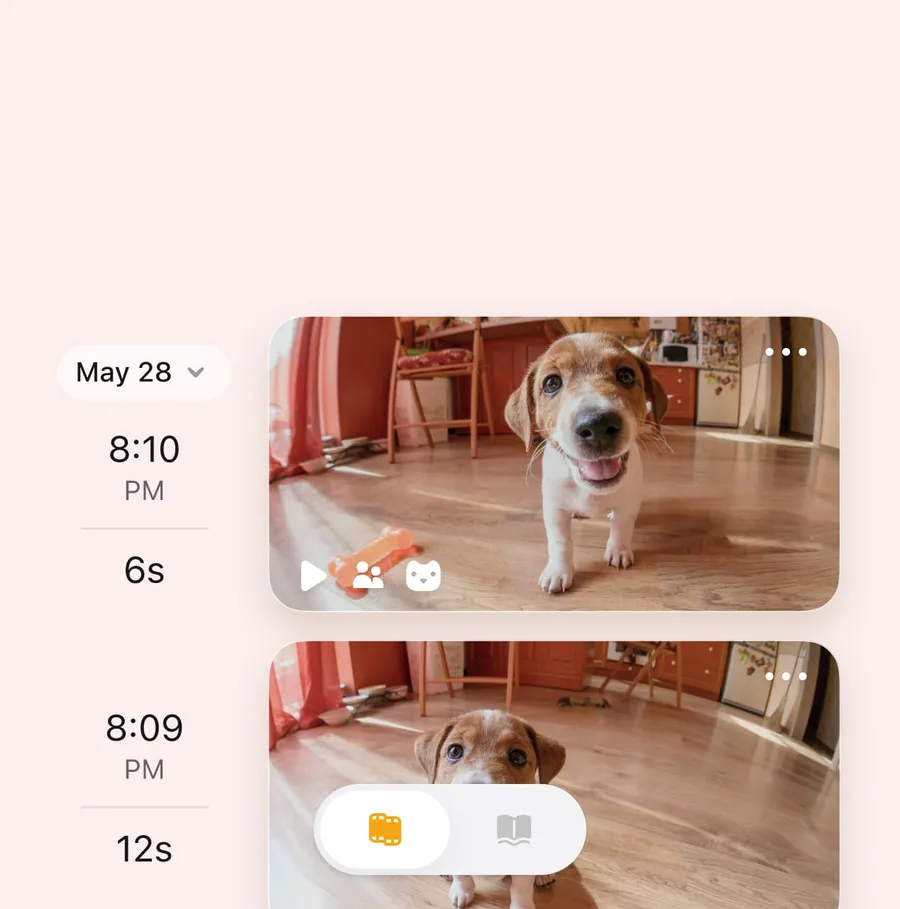
Thirty second clips
Video history you can scrub back through, three days on the mid plan and up to ninety on the top one.
Emergency alerts
Glass breaking and fire detection, on top of the sound and motion alerts.
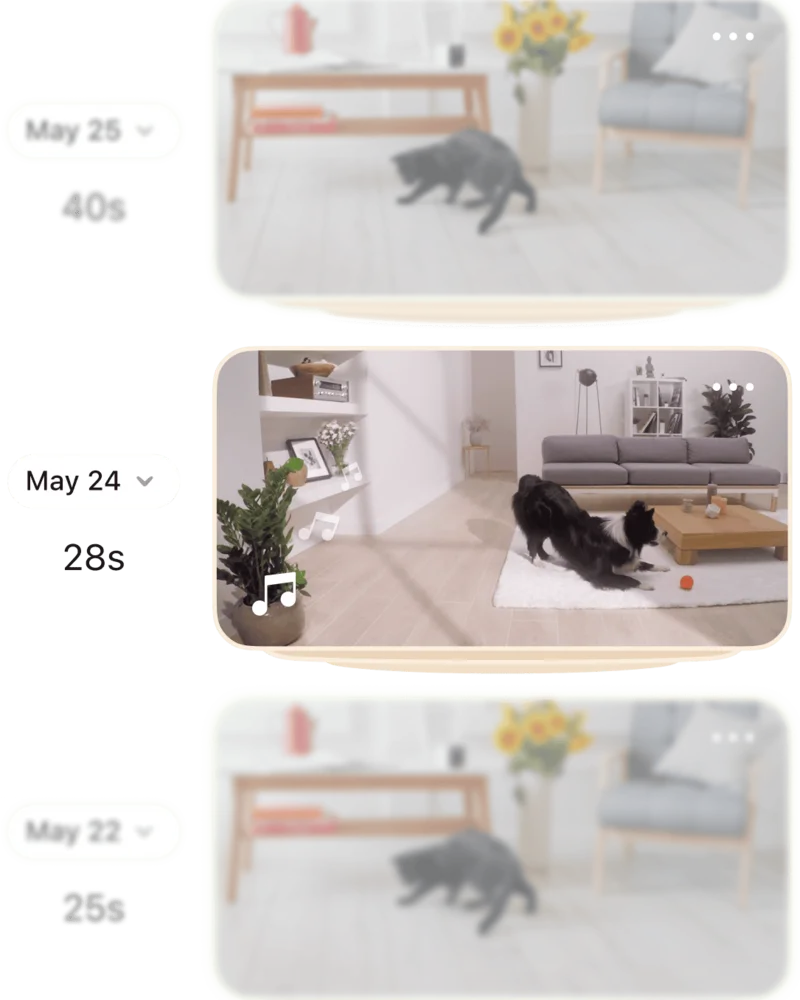
And then there is the feature that most closely matches what the itching guide asked for. Petcube Care compiles the day into a thirty second Daily Diary from the moments with the most activity. It is sold as a nice thing to receive, which it is. It is also, incidentally, a scratching log, a panting log and a hiding log, delivered daily without anyone having to remember to keep one.
Three cases Petcube publishes on its own site


"My cat, Ziggy Spice Williams, has asthma and needs constant monitoring. One day, while I was at work, Ziggy had a major asthma attack. Thanks to a Petcube Care sound notification and camera's rotation function, I saw her coughing and wheezing behind the table. I rushed home, gave her medication, and took her to the vet."
Jessica and Ziggy, published on petcube.com

"While me and my wife were out of town, we checked our Petcube Cam and noticed our dog acting strangely. Zooming in, we saw severe hives covering his body. We rushed home and found two sting bites on his neck. Thanks to Petcube, we were able to take him to the ER vet in time."
Walters family and Bobby, published on petcube.com

"One day, my pup knocked a mirror off the wall, shattering it on the floor. Petcube immediately notified me, and I saw the shards of glass everywhere. While I was at work, I texted my roommate, who quickly cleaned up the mess. Thanks to these alerts, my dog was spared from getting injured."
Ashley and Tylo, published on petcube.com
All three are reproduced from the Petcube homepage and the Petcube Care page. Note what they have in common: in every case the owner was somewhere else, and the alert is the only reason there was a decision to make at all.
The other half of the answer, at eleven at night
Watching gets you the facts. It does not get you the verdict. And the middle column, by definition, is the column where you are not sure, which is a bad time to be alone with a search engine.

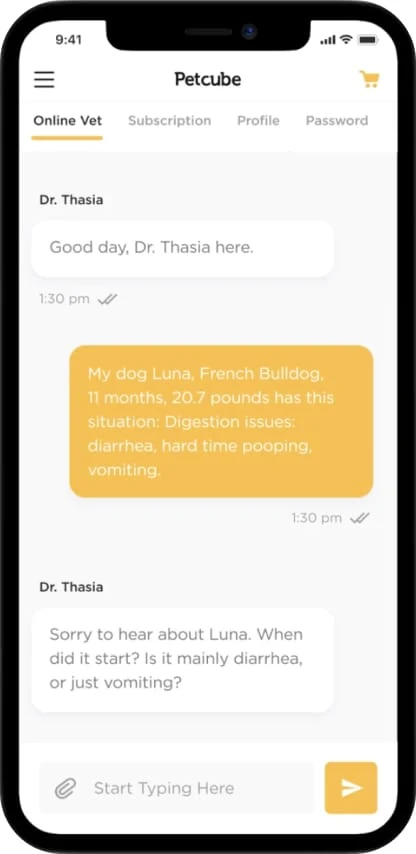
Petcube's Online Vet is a chat with a licensed veterinarian, running around the clock, for $9.99 a month with unlimited conversations. The detail that makes it credible is in their own FAQ: the vets are certified practitioners currently working shifts in a physical clinic, who take chats between appointments. Their published average wait for a first connection is under three minutes. The service covers cats and dogs.
It is worth being equally clear about what it is not, because Petcube states this itself rather than burying it. Online vets cannot prescribe prescription medication, and they cannot perform a physical examination or run tests. What they can do is look at your photos and video, ask for the history you have been keeping, and tell you which column you are actually in.
Which, for the entire length of this page, has been the only question.
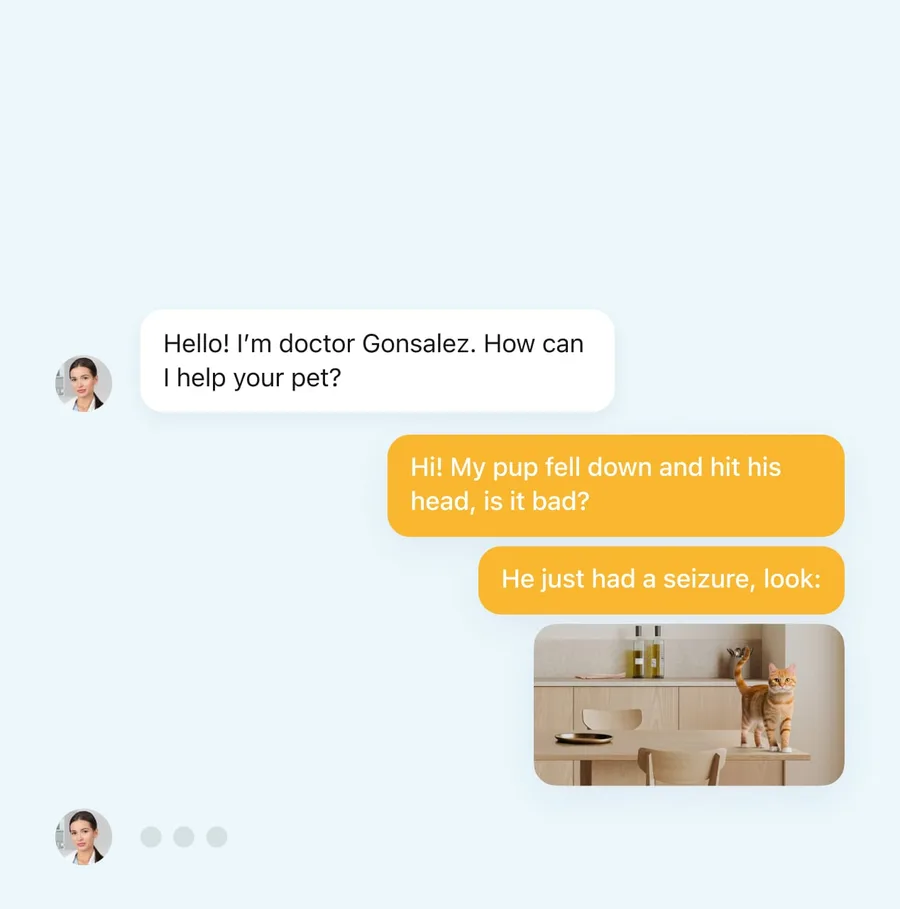
That is the piece the camera and the chat only supply together. A written description of a seizure is a guess about what you half saw. A thirty second clip of it is evidence, and the vet on the other end reads it in seconds.

Who is on the other end. Petcube lists its vets by name on the service page, with a count of satisfied customers beside each. Dr. Anitha, DVM, MSc, MPHIL is one of them, shown today with 1,273 satisfied customers.
As displayed on petcube.com/vet-chat
The arithmetic Petcube publishes
Their Online Vet page makes a claim worth quoting because it is falsifiable and they put a number on it: sixty percent of vet visits could be just a chat. Here is the comparison exactly as they publish it.
| Online Vet | Vet visit | |
|---|---|---|
| Commute | $0 | $20+ |
| Consultation | $9.99 | $100+ |
| Time spent | Under 3 min to connect | 2h |
| Pet anxiety | None | Yes |
| Total | $9.99 / month | $120+ / visit |
Figures as published on petcube.com/vet-chat, except the connection time, which is the average Petcube publishes in its own FAQ. Consultation prices vary by clinic and region.
Not sure which column you are in?
Petcube Online Vet, 24/7, unlimited chats, $9.99 a month.
Talk to a vet on petcube.com Cats and dogs. Online vets cannot prescribe prescription medication or perform a physical exam.What pet owners say about the chat
Rated 4.6 out of 5 across more than 500 reviews on the Online Vet page. Three of them, with the photos Petcube publishes alongside.

"Fast response time, great feedback and caring Vet. Dr. Saskia was a great help. She made me feel a lot better about my concern."
Kathelin & Lola, on petcube.com

"Dr Paulina was very helpful in addressing Haribo's pain and helping me find a way to make him comfortable."
Alex & Haribo, on petcube.com

"My Dr was great, responded in a timely manner and eased my anxiety. I find this service so luxurious and I'm thankful I found Petcube."
Lexie & Cora, on petcube.com
4.6/5
Online Vet, across more than 500 reviews
4.5/5
Petcube Cam, 19,631 customer ratings
4.3/5
Petcube app, 19,143 ratings
All three figures as displayed on petcube.com on August 14, 2026.
Featured in media, as listed on petcube.com
What it costs to be able to answer the question
Nothing on this page requires a subscription to be useful. The triage columns work with a notebook. But if the honest answer to "when did it start" is "I have no idea", here is what Petcube charges today to change that.
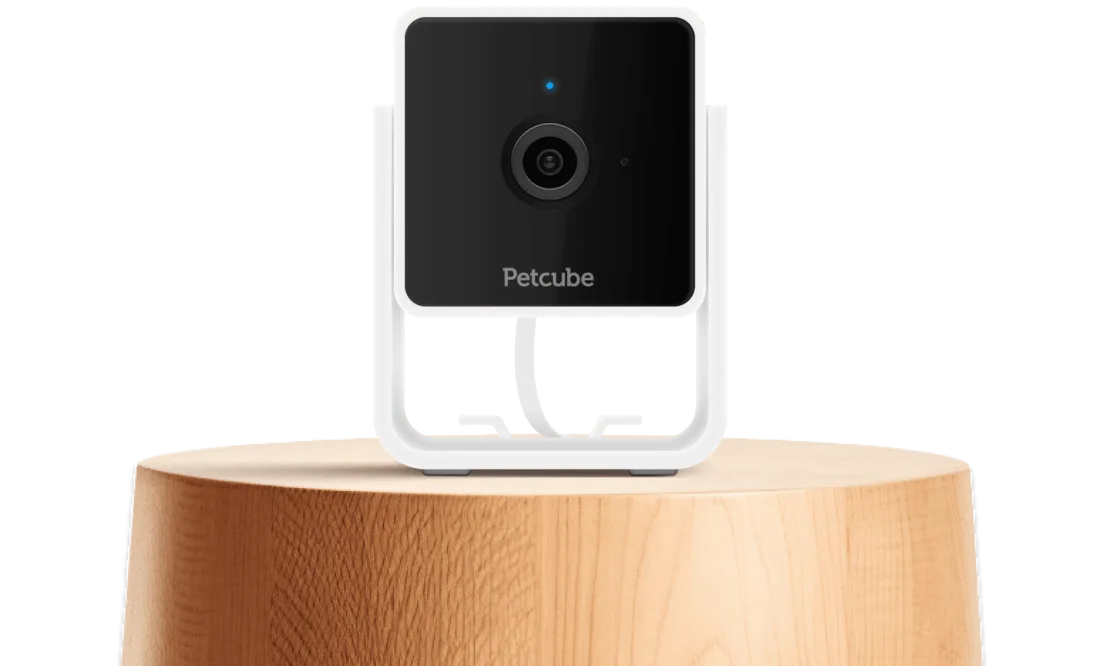
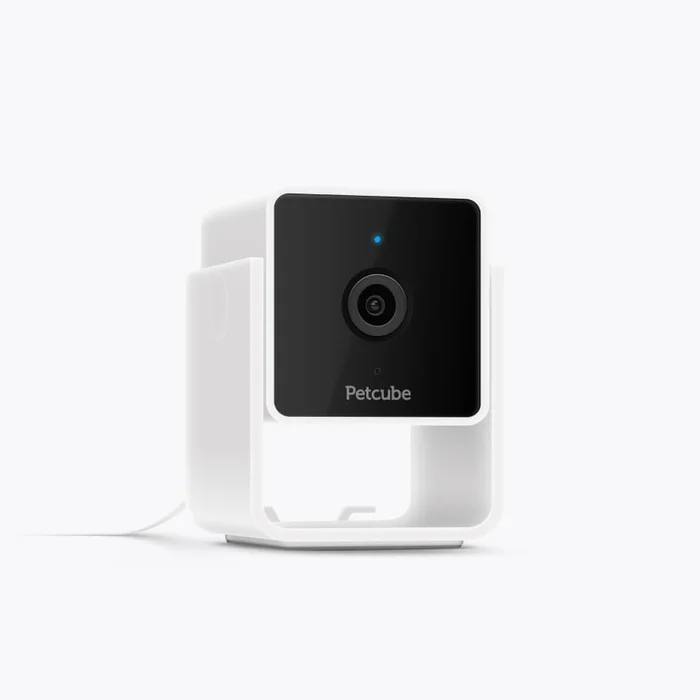
Petcube Cam
$31.99 $34.99
- 1080p, 110 degree lens, 8x zoom
- Night vision to 30 feet
- Two way audio
- Magnetic mount or double sided tape
Petcube Care
From $3.99/mo
- Basic is free with every camera
- Optimal, billed yearly: 3 days of history, smart alerts, Daily Diary
- Premium, billed yearly at $11.99 a month: 90 days of history
- Care Bundle: camera included, from $5.99 a month
Online Vet
$9.99/mo
- 24/7, unlimited chats
- First connection typically under three minutes
- Cats and dogs
- No prescriptions, no physical exam
Prices as listed on petcube.com on August 14, 2026, and subject to change. Petcube publishes a 45 day money back policy on purchases made through its own store, and Wi-Fi at 2.4 GHz is required for the cameras.
Questions people ask before they subscribe
Can an online vet actually diagnose anything without touching my pet?
Petcube's own answer is a qualified yes. Some diagnoses need a physical exam and tests. What a vet can work with remotely is species, breed, age, history, behavior and any change in it, plus photos and video, and they may ask you to perform a check yourself. Their words: these clues help narrow down the possible problems and provide better advice.
Can they prescribe medication?
No. Petcube states that its online vets cannot prescribe prescription medicines, because of the nature of telemedicine and the regulation around it. Certain medications can be recommended, but a prescription has to come from your own veterinarian.
How long do I wait?
Petcube publishes an average waiting time of under three minutes for the first connection, with vets on call every day, late at night, and on holidays.
Do I need a camera for the vet chat?
No. Online Vet is its own subscription in the Petcube app. The camera answers a different question, which is what happened while you were out.
Does the camera need a subscription?
No. Petcube states that all of its cameras work out of the box without one. Without Petcube Care you get the live stream and the app, but not stored video or smart alerts, which are the two things that turn watching into a record.
You will not remember when it started. That is the whole problem.
Petcube's app carries both halves: the record of what happened, and a licensed vet who will read it with you.
Start on petcube.com Online Vet $9.99 a month. Petcube Cam $31.99. Care from $3.99 a month.